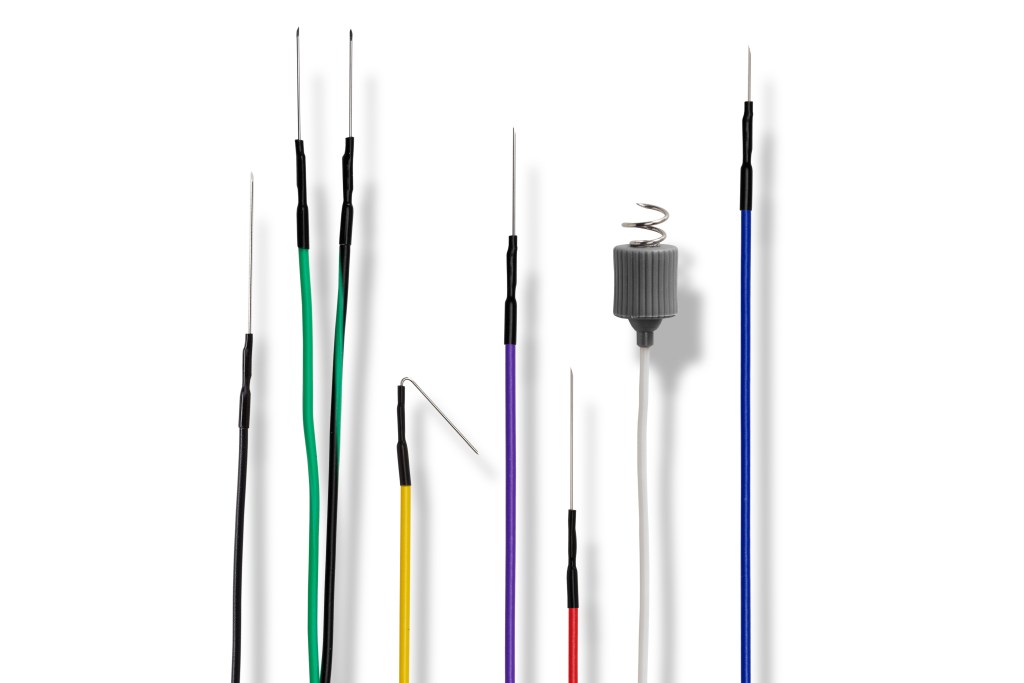
Prevention of Needlestick Injuries During IONM
Subdermal needle electrodes carry inherent risk of needlestick exposure to not only the IONM technologist but other personnel:
- Needle-stick injuries can expose staff to serious bloodborne pathogens including Hepatitis C, Hepatitis B, and Human Immunodeficiency Virus (HIV).
- Preventing needle-stick injuries is the best way to protect yourself and others from these infections!
- According to the CDC, there are around 385,000 reported needlesticks among hospital-based healthcare personnel (2015). More occur in other settings, with potentially half being unreported.
- Luckily the potential viral load from an IONM needle is low due to there being no hollow bore of the needle, but it is still considered a high risk.
When and how often do needlestick injuries occur during IONM? Who gets stuck?
- According to a retrospective study of IONM-related needle-sticks by Tamkus & Rice (2013): There were 174 injuries reported across 50,665 monitored surgeries (0.34% of their group).
- Most needle-sticks for IONM technologists during removal of the needles (52%), and during patient positioning for non-IONM personnel (67%).
- For example, surgeons are particularly at risk with abdominal leads during patient positioning when their arms are pulled back which may remove tape and expose the needle.
- Nurses and anesthesia personnel are at risk during positioning of head, arms, and wrists.
- Fast turnovers and positioning can add pressure on the IONM technologist to place quickly with improper handling technique.
Best, acceptable, and unacceptable practices for placement and removal of subdermal needles:
- Always prep needle sites with an alcohol wipe to prevent infection.
- Communication: Inform personnel of where needles are placed when they may be hidden due to patient positioning – Back of neck (‘Crv’), behind arms (Triceps), behind legs (Pop Fossa, Gastroc, Femoris). Do not use jargon that may not be quickly understood (“PTN needle is out!”)
- Troublesome electrodes such as those on the wrists (Ulnar, Brachioradialis, Thenars), abdomen, and legs (Psoas) should also be pointed out. Consider using extra tape or Tegaderm.
- Slow down placement: Slowing down a beat during placement and properly securing electrodes will save more time than dealing with a needle-stick injury.
- Remove needles slowly: Ripping all electrodes out from under the drapes at once can cause more problems than they solve. Needles can bend and cause tissue damage & bruising. The wire can break and leave a loose needle under the drapes. It is recommended to hold the electrode wire near the needle, peel away the tape, remove the needle and inspect it.
- Hold pressure on sites to prevent bleeding. Clean any excess blood and always remove tape and adhesive. Using scissors, cut the extra length of wire from the needle to prevent over-filling the sharps container.
- An acceptable practice is securing electrode wires with tape if no stress loops are placed. Always ask staff before taping wires to the bed.
- Removing electrodes by yanking wires from the foot of the bed is unacceptable and potentially harmful to the patient, staff, and yourself!
- Finally, if a needlestick injury does occur, follow your company’s and hospital’s protocols!
Tamkus A, Rice K. Risk of Needle-Stick Injuries Associated With the Use of Subdermal Needle Electrodes During Intraoperative Neurophysiologic Monitoring. J Neurosurg Anesthesiol. 2013;26; 65-68
 The Nerve Desk
Leave a comment